
The European Summer You Haven’t Heard Enough About
There is a particular kind of European summer traveler who dreams of the classics: long lunches in Saint-Tropez, sunsets above Positano, whitewashed terraces spilling down the cliffs of Santorini. And honestly, those places are famous for a reason. They are beautiful. Sometimes impossibly so.
But beauty can become a victim of its own success. In July and August, some of Europe’s most iconic seaside destinations can begin to feel less like hidden escapes and more like beautifully staged productions — magnificent, yes, but crowded enough that part of the magic slips away.
The joy of knowing Europe well is not in dismissing those legendary places. It is in knowing where else to look.
Beyond the obvious names are coastlines and islands that still feel slightly under the radar to many American travelers. Not undiscovered — Europeans have known them forever — but less saturated, less performative, and often more textured. Places where the beaches are just as dazzling, the seafood just as memorable, and the evenings perhaps even more romantic because they feel lived-in rather than curated.
Montenegro — The Adriatic Before It Became a Brand
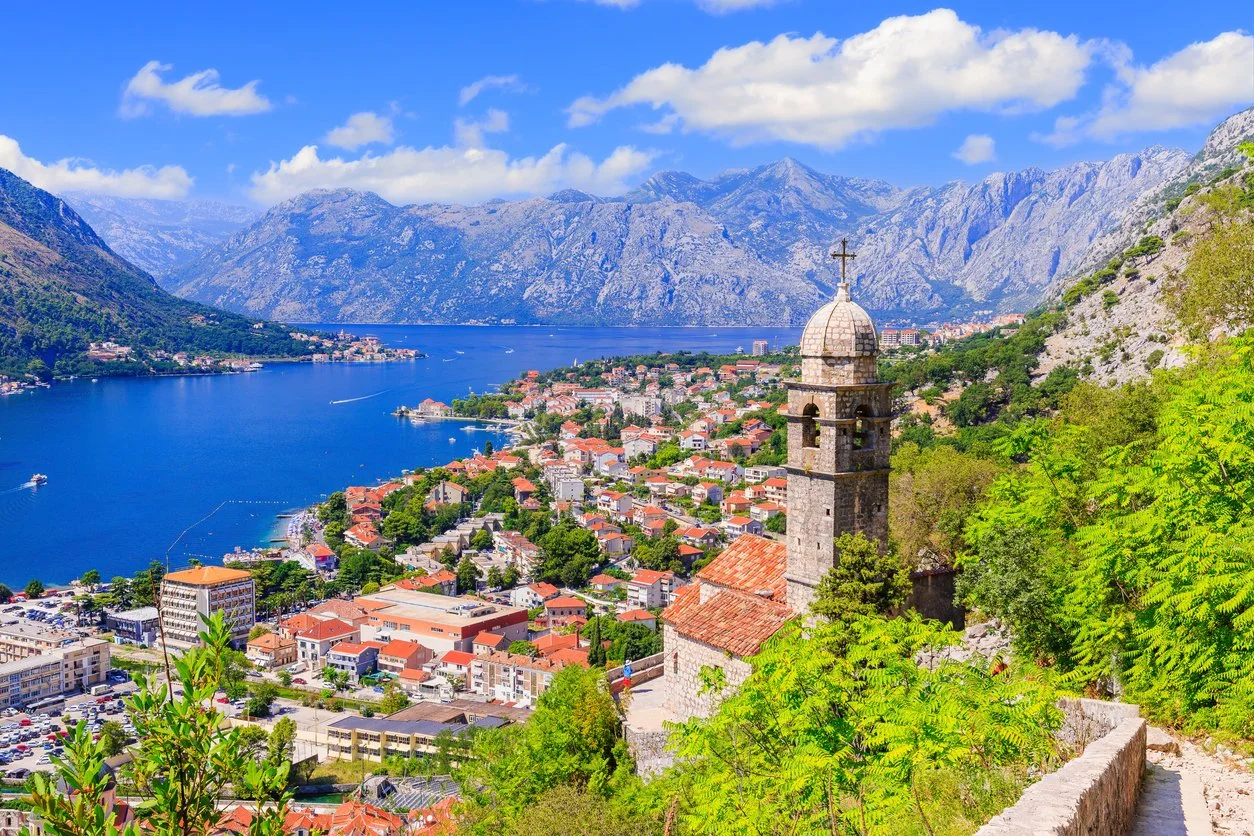
Kotor, Montenegro
Montenegro feels almost improbable the first time you see it. Massive dark mountains plunge directly into a cobalt Adriatic sea, with medieval stone towns tucked into narrow inlets that resemble Scandinavian fjords touched by Venetian history.
The Bay of Kotor is the obvious headline — a winding, dramatic stretch of water lined with church towers, shuttered stone homes, and tiny waterfront villages where dinner still stretches lazily past midnight. Kotor itself is all polished stone alleys, old fortifications, and café terraces hidden inside medieval walls. Nearby, Perast feels quieter still, with crumbling palazzos and tiny docks where locals dive directly into the bay.
Further down the coast, places like Budva and the Luštica Peninsula offer beach clubs, yachts, and glamorous energy without yet feeling as relentlessly publicized as parts of the French Riviera.
What makes Montenegro compelling is the contrast. You can spend the morning swimming in startlingly clear water and the afternoon driving into dramatic mountain landscapes that feel almost alpine. It has a cinematic quality. It wild, vertical, and still just rough enough around the edges to feel authentic.
Puglia — Italy Slowed Down
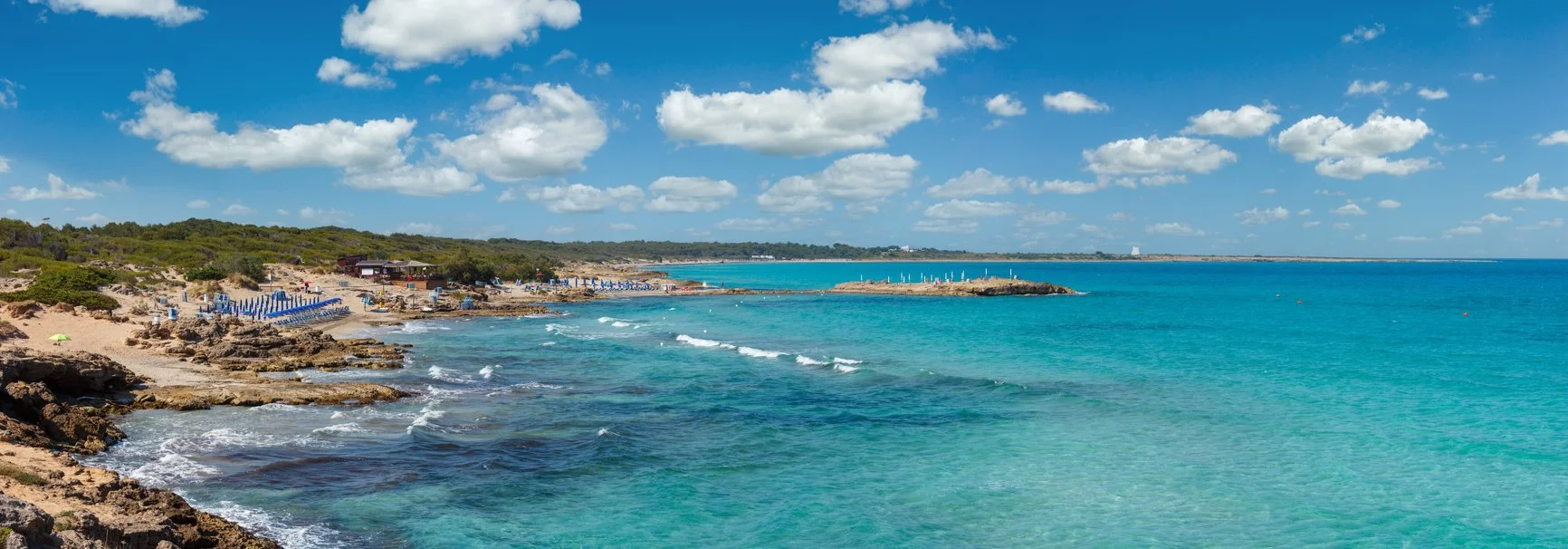
Punta della Suina near Gallipoli
Stretching along the heel of the boot, Puglia has become increasingly fashionable, but it still retains an ease and spaciousness missing from some of Italy’s more famous summer destinations. Here, the landscape shifts between centuries-old olive groves, chalky cliffs, fishing villages, and long stretches of turquoise sea.
The towns are part of the seduction. Polignano a Mare clings dramatically to limestone cliffs above the Adriatic. Ostuni rises in layers of whitewashed buildings glowing against the afternoon sun. Lecce feels almost baroque and honey-colored, with ornate churches and quiet piazzas that seem designed for aperitivo.
What travelers often remember most, though, is the rhythm of the place. Long outdoor dinners. Beach clubs that feel relaxed rather than scene-driven. Family-run masserie — fortified farm estates converted into intimate luxury hotels surrounded by fig trees and lavender.
Puglia does not demand that you rush. That may be its greatest luxury.
Sicily — The Most Complex Island in the Mediterranean
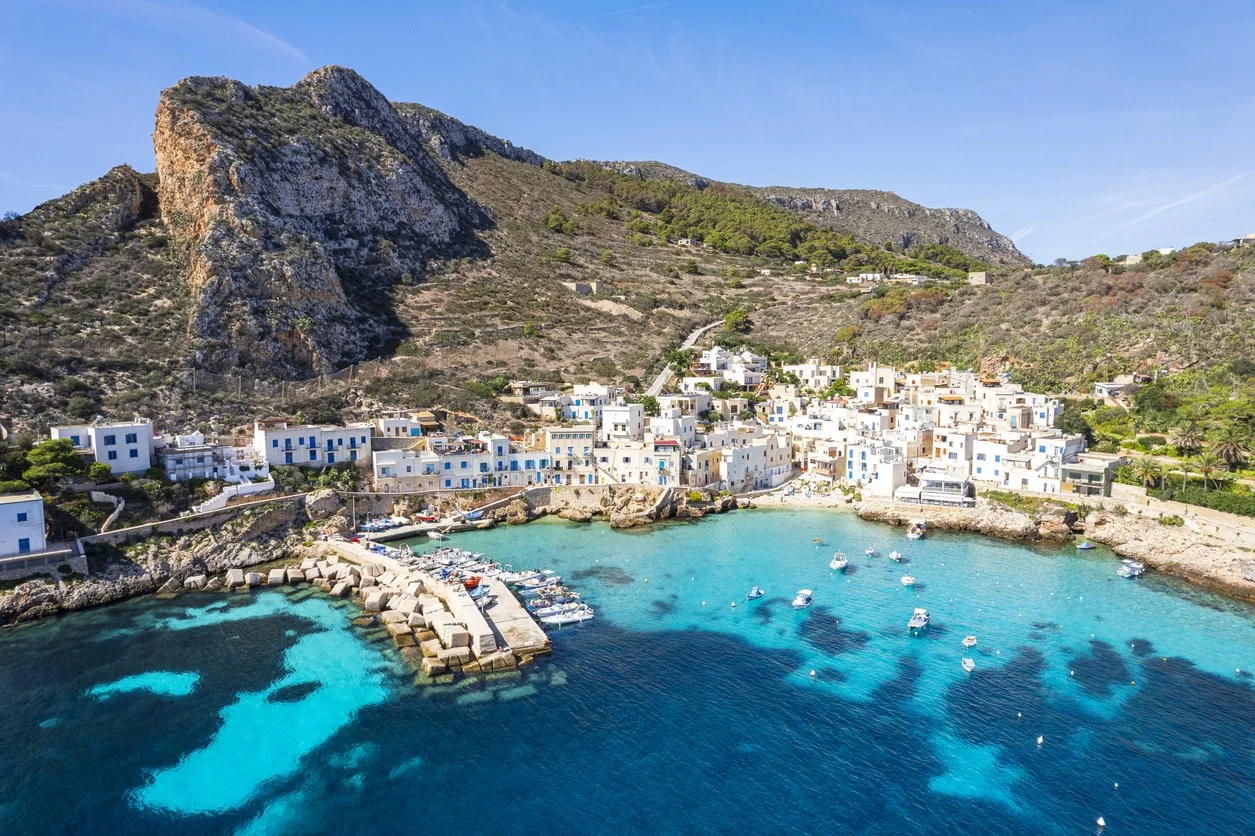
Iconic fishing village of Levanzo island
Sicily is not subtle. It is layered, dramatic, chaotic, elegant, volcanic, and deeply seductive all at once.
Unlike smaller resort-focused islands, Sicily feels like an entire world. Greek temples rise above the sea. Baroque towns tumble down hillsides. Mount Etna smolders in the distance while fishermen unload swordfish into ancient harbors.
Places like Taormina are already well known and deservedly so. But Sicily’s scale means there is always another corner to explore. The southeastern towns of the Val di Noto feel sun-bleached and cinematic. Coastal villages near Cefalù mix sandy beaches with medieval streets. On the Aeolian Islands, volcanic landscapes meet impossibly blue water.
The beaches themselves vary wildly, from rocky coves to long sandy stretches, but Sicily’s real appeal is cultural depth. Arab, Norman, Spanish, Greek, and Italian influences all coexist here, often in the same meal or the same building.
You do not simply “go to the beach” in Sicily. You immerse yourself in a place with thousands of years of accumulated character.
Corsica — French Elegance, Wild Landscape
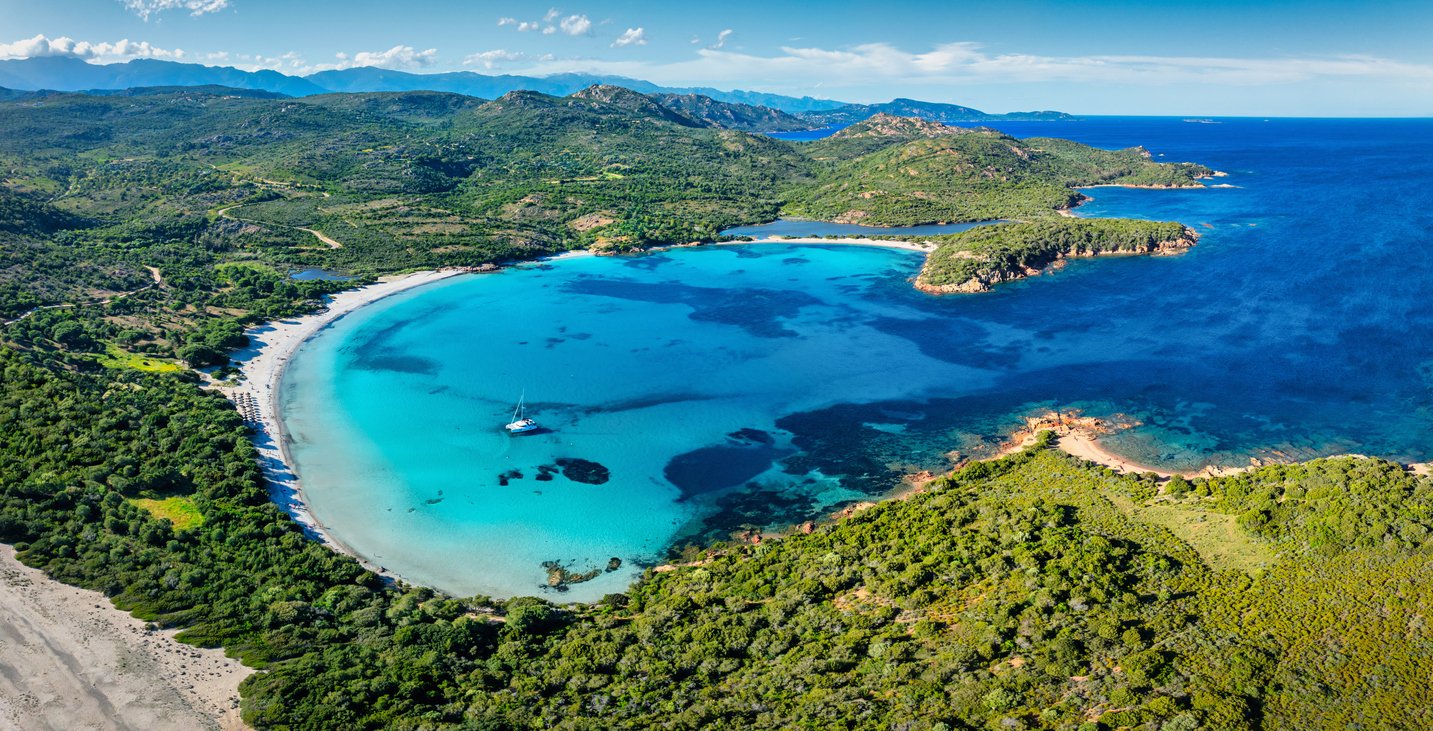
Rondinara Beach Corsica Bay
Corsica occupies a fascinating middle ground between France and Italy while feeling entirely itself.
The beaches are Caribbean-level beautiful in places with translucent water, white sand, and hidden coves. But what surprises many travelers is how mountainous the island is. Sharp granite peaks rise dramatically behind the coastline, creating scenery that feels both sophisticated and untamed.
Towns like Bonifacio are unforgettable: limestone cliffs dropping straight into the sea with medieval buildings perched impossibly at the edge. Inland villages remain deeply traditional, while marinas in places like Porto-Vecchio attract a polished European summer crowd without the intensity of Saint-Tropez.
Corsica feels quieter than much of the Riviera. More self-contained. More discreet. There is luxury here, certainly, but often expressed through understated hotels, long seaside lunches, sailing excursions, and landscapes that still feel genuinely preserved.
For travelers who love the South of France but crave more space and less spectacle, Corsica can feel like a revelation.
Sardinia — Mediterranean Glamour with a Wilder Soul
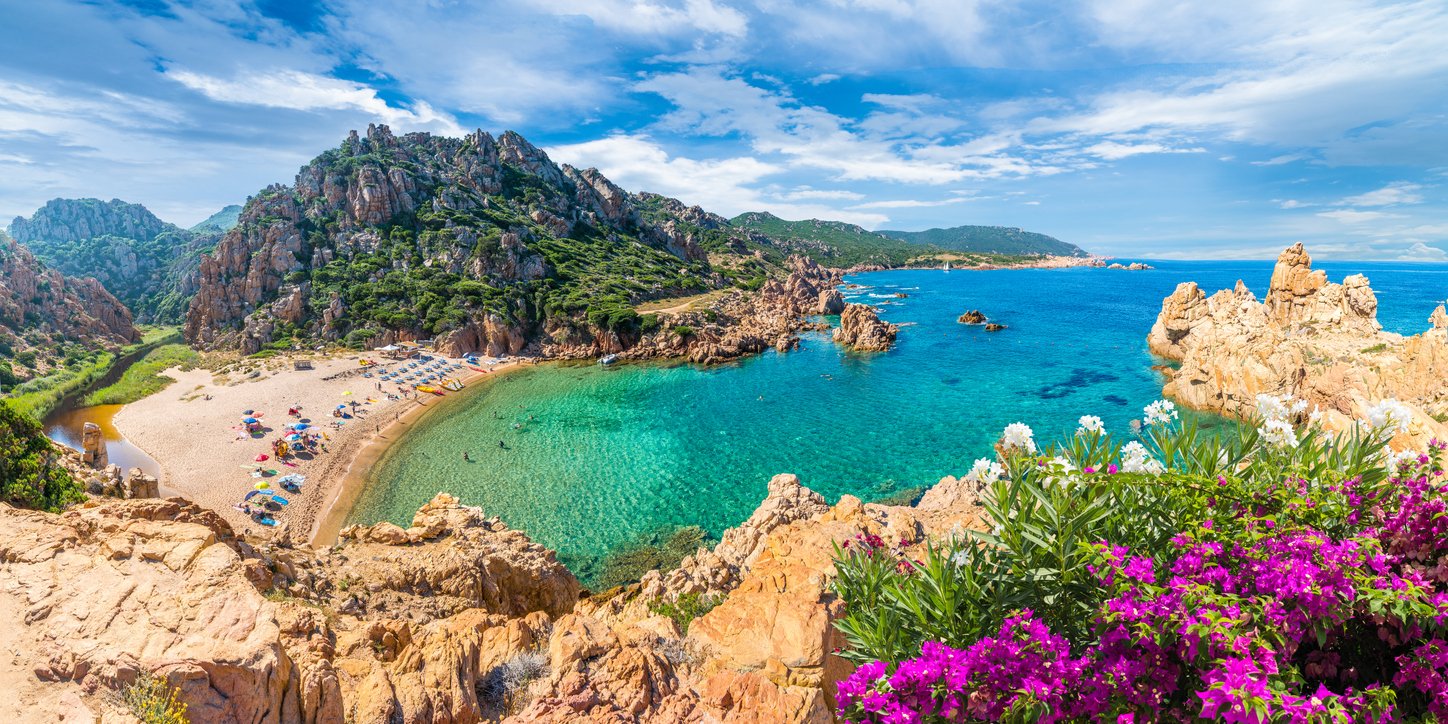
Spiaggia di Li Cossi, Sardinia
Sardinia has a way of feeling both glamorous and deeply untamed at the same time.
Yes, there are yachts anchored in luminous turquoise coves and elegant beach clubs tucked along the Costa Smeralda. But beyond the polished marinas and stylish seaside hotels lies something more rugged and atmospheric, an island of granite mountains, windswept coastal roads, ancient shepherd villages, and beaches so impossibly clear they scarcely seem real.
The water is the first thing people remember. Along much of Sardinia’s coastline, the sea shifts through impossible shades of emerald, sapphire, and translucent aquamarine more commonly associated with the Caribbean than the Mediterranean. Hidden coves appear between dramatic rock formations, while long stretches of pale sand remain remarkably uncrowded outside the peak August holiday weeks.
In the north, towns like Porto Cervo and Porto Rotondo bring a sophisticated energy to summer, with sleek sailboats, elegant terraces, and waterfront dinners that stretch deep into the evening. Yet even here, Sardinia feels more discreet than performative. It is luxurious without needing to announce itself too loudly.
Further south, the atmosphere softens even more. Around Chia and Villasimius, beaches unfold in long arcs of white sand backed by dunes and wild Mediterranean vegetation. Inland, tiny stone villages and rustic agriturismos preserve a Sardinia that feels almost untouched by time, where traditions, dialects, and local cuisine remain fiercely rooted to the island.
Part of Sardinia’s appeal is precisely this duality. It can be polished and refined one moment, then wild and elemental the next. You might spend the afternoon at an elegant seaside restaurant and the evening driving through mountain roads scented with rosemary and sea air, passing centuries-old villages illuminated only by warm amber lights.
For travelers who love the idea of the Mediterranean but crave something with a little more texture, space, and soul, Sardinia can feel like one of Europe’s great summer revelations.
Final Thoughts
The most memorable summer destinations are not always the ones with the biggest reputation. Sometimes they are the places that allow you to feel slightly ahead of the crowd — not because nobody has heard of them, but because they have not yet been flattened by overexposure.
The classics will always have their place. There is still magic in Saint-Tropez at golden hour, in Positano glowing above the sea, in the volcanic cliffs of Santorini. But Europe rewards travelers who look one step further. The coastline is long. The islands are endless. And some of the most beautiful summers begin in places you simply had not considered yet.
And that is where having the right advisor matters. At Badini & Trent, we help travelers move beyond the obvious and toward the version of Europe that fits them best. With firsthand experience across more than 40 countries and preferred partnerships with many of the world’s finest hotels and travel brands, we help clients navigate not only where to go, but how to experience a destination well; thoughtfully, comfortably, and with access and insight that elevate the journey from ordinary to unforgettable.
Travel without compromise.
