
Why Chicago?
The best thing about Chicago may be the hardest thing to put on an itinerary.
By Peter Trent
Founder & Luxury Travel Advisor, Badini & Trent
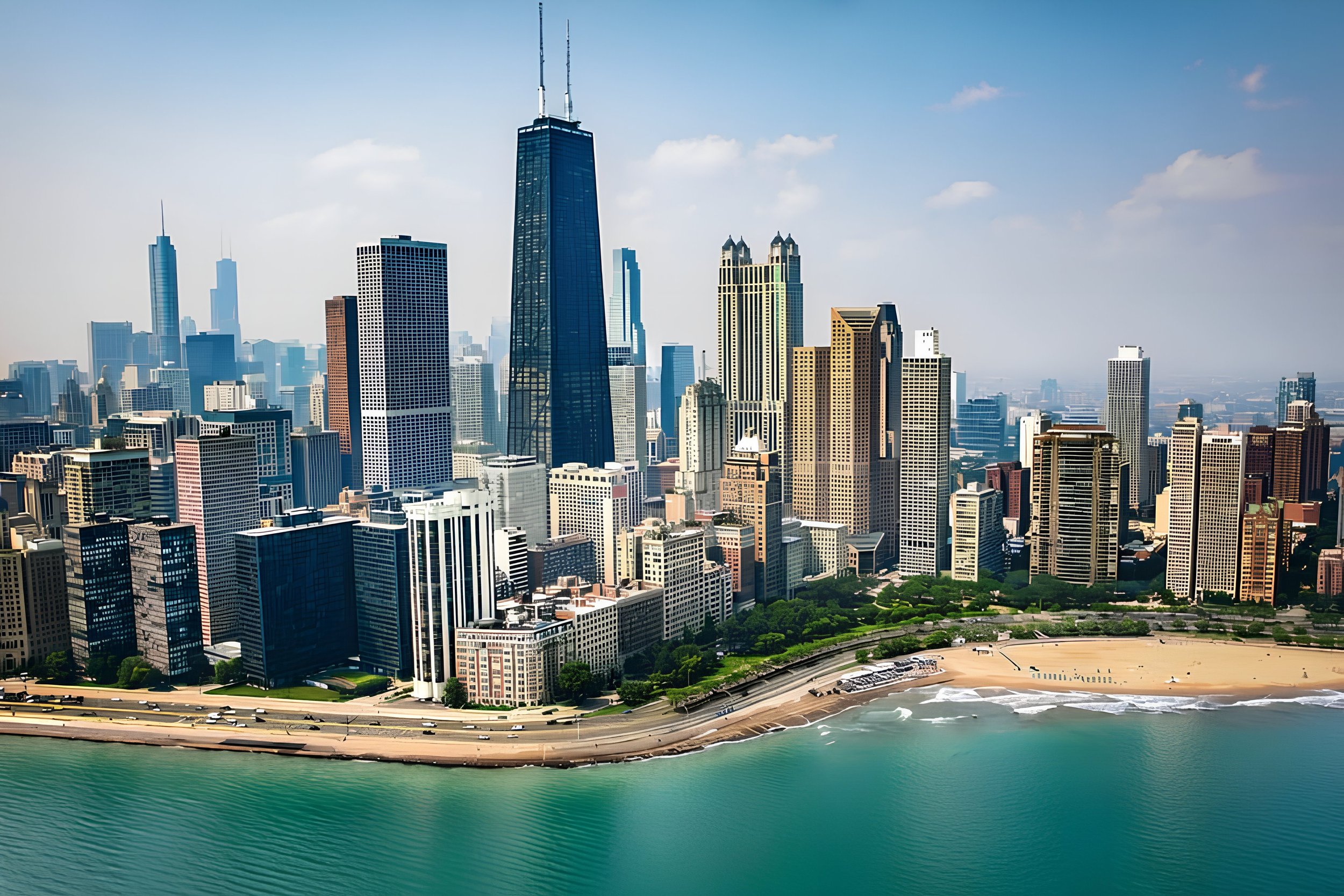
Every city has something it's eager to show you. A famous skyline. A celebrated museum. A renowned restaurant. A shopping district you've heard about for years.
Chicago has all of those things.
Yet after spending four days there, I came home believing that none of them was the city's greatest attraction. It took me a while to understand why.
My father's family came from Chicago before eventually settling in Santa Barbara. Those family ties have always made me curious about the city—and over the years, I've also come to appreciate something else. I've long found Midwesterners remarkably easy to talk with. There is an openness that doesn't ask where you work before deciding whether you're worth knowing. Conversations begin naturally. Recommendations are offered freely. Whether that's simply my own perception or something deeper in the culture, Chicago has always felt welcoming to me.
Getting there has become remarkably easy. With the introduction of year-round nonstop service, my hometown of Santa Barbara is now just a few hours from Chicago, making it possible to trade the Pacific Ocean for Lake Michigan with surprising ease.
Carlos and I had come to Chicago partly on business. We had arranged site visits at several of the city's luxury hotels, but somewhere along the way the itinerary became secondary. Instead of rushing from one attraction to another, we found ourselves slowing down, wandering, and letting the city reveal itself one experience at a time.

The Riverwalk is one of those places where Chicago seems to invite you into the scene rather than simply asking you to admire it. Although you're in the heart of downtown, it often doesn't feel that way. Pathways, cafés, and seating areas at the water's edge create a quieter world just below the streets, where the traffic gradually fades into the background. Instead, tour boats drift past with guides pointing out the city's architectural landmarks, sleek yachts cruise upriver, and the occasional kayaker slips between them almost unnoticed. Somewhere along the way, you stop trying to see Chicago. You simply find yourself in it.
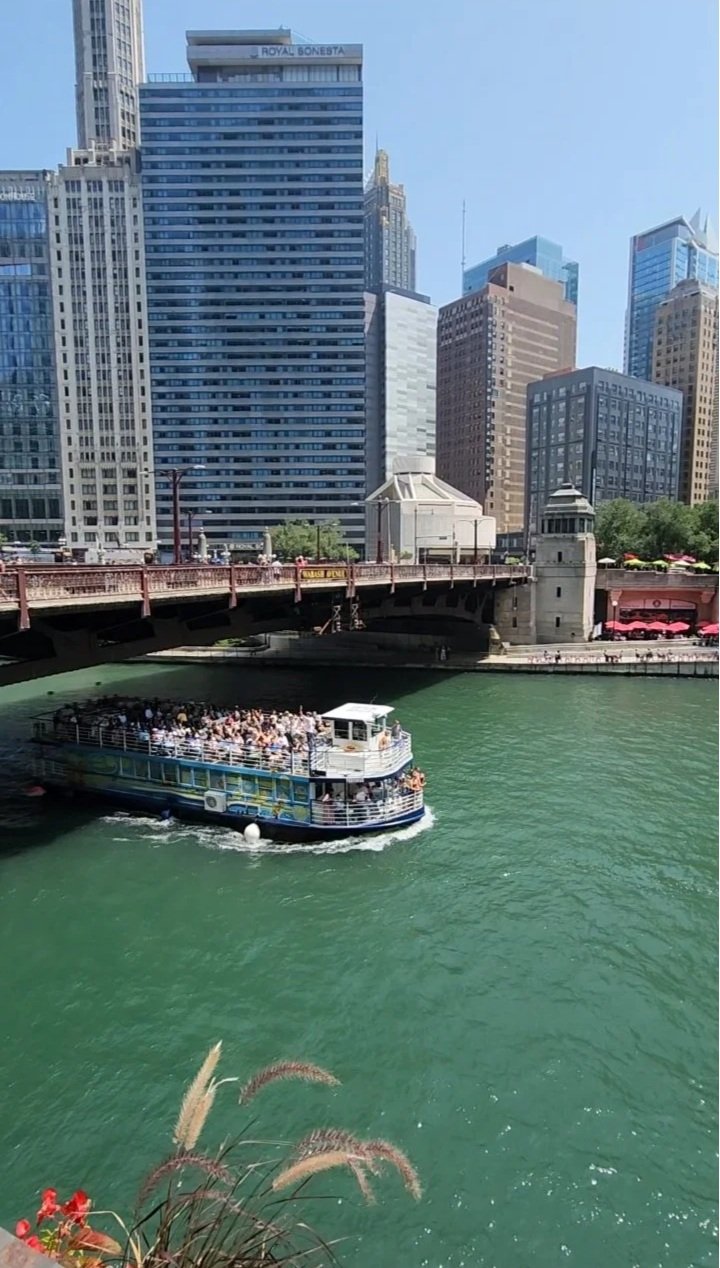
If there is one experience I would recommend to every first-time visitor, it would be an architectural cruise. The buildings are impressive from the sidewalk, but from the river they become something else entirely. What first appears to be a beautiful skyline gradually reveals itself as a story of engineering, reinvention, ambition, and civic pride.
Water, it turns out, is one of Chicago's greatest gifts.
One afternoon, we rented a small powerboat and headed out onto Lake Michigan. Before long we dropped anchor just offshore, with Chicago's skyline rising above us. The water was cool, crystal clear, and impossible to resist. We spent the afternoon diving into the lake from the bow of the boat, floating in water that felt more like an ocean than a lake, then stretching out in the sun as the boat gently rocked beneath us. Looking back toward the city, I realized we weren't simply admiring Chicago anymore. For a little while, we were part of it.
The next day, that feeling continued as we rented bicycles and followed the Lakefront Trail north. Before long, it no longer felt as though we were touring Chicago. It felt as though we'd wandered into the city's backyard, sharing the trail with people out for a run, walking their dogs, meeting friends, or simply enjoying a summer afternoon. For miles, the city was less interested in entertaining us than simply inviting us to share in its everyday life.
It was another reminder that the most memorable travel experiences often happen when you stop trying to see everything and simply allow yourself to be where you are.
History has a way of drawing you in as well.
The Field Museum, home to Sue, the largest and most complete Tyrannosaurus rex ever discovered, has a way of making you feel small in the best possible way. At the Griffin Museum of Science and Industry, however, one exhibit affected me more than any other. Walking through the captured German U-505 submarine is one of those rare museum experiences that quietly changes your perspective. Standing inside those narrow steel passageways, the courage required to board an enemy submarine becomes easier to imagine, even if the reality of doing so remains almost impossible to comprehend today.
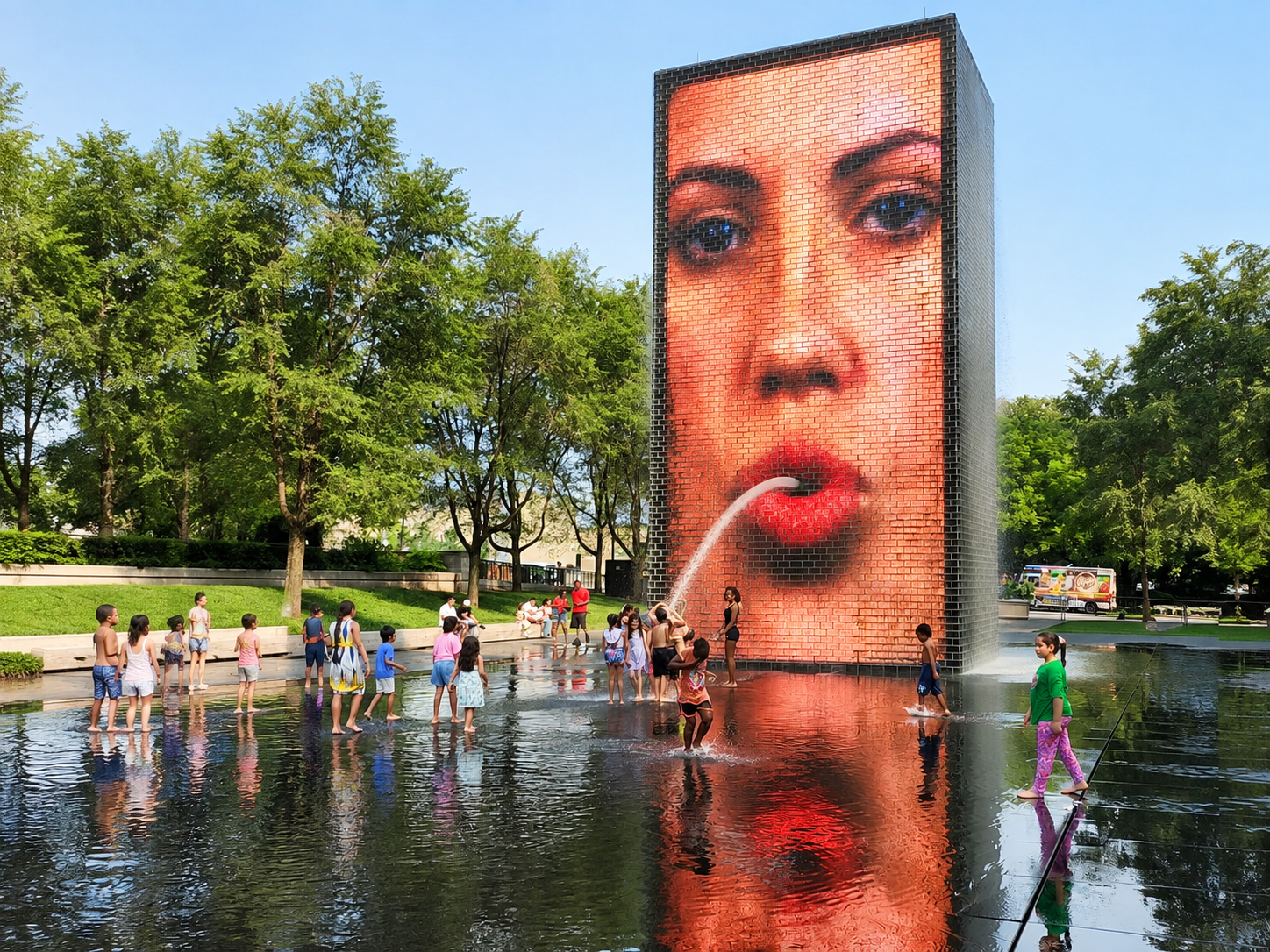
Chicago kept surprising us. Its place in jazz history is impossible to ignore. Louis Armstrong's career took flight here in the 1920s, helping establish Chicago as one of America's great centers of jazz. Today, that legacy lives on in historic clubs like the Green Mill Cocktail Lounge and countless other venues where live music remains an integral part of the city's cultural fabric. That appreciation for music extends well beyond the clubs. During the summer, the Jay Pritzker Pavilion in Millennium Park fills with people gathering for free concerts beneath the skyline. Some arrive with picnic baskets, others with folding chairs, and before long the lawn fills with people sharing one of the city's simplest pleasures.
Even the Magnificent Mile feels less like a shopping district than a place people genuinely enjoy spending time. At a time when many downtown retail streets have struggled, this one remains lively, walkable, and full of energy. Luxury boutiques stand comfortably alongside Nordstrom, Zara, H&M and other familiar names, but shopping is only part of the experience. Public art installations change throughout the year, giving the avenue a different personality with each visit. During our stay, oversized swimmer sculptures from Monuments of Stillness were perfectly at home in the summer sunshine, a playful reminder that Lake Michigan is never very far away. People stopped to smile, photograph them, and continue on their way. It felt less like an outdoor gallery than another invitation to engage with the city.
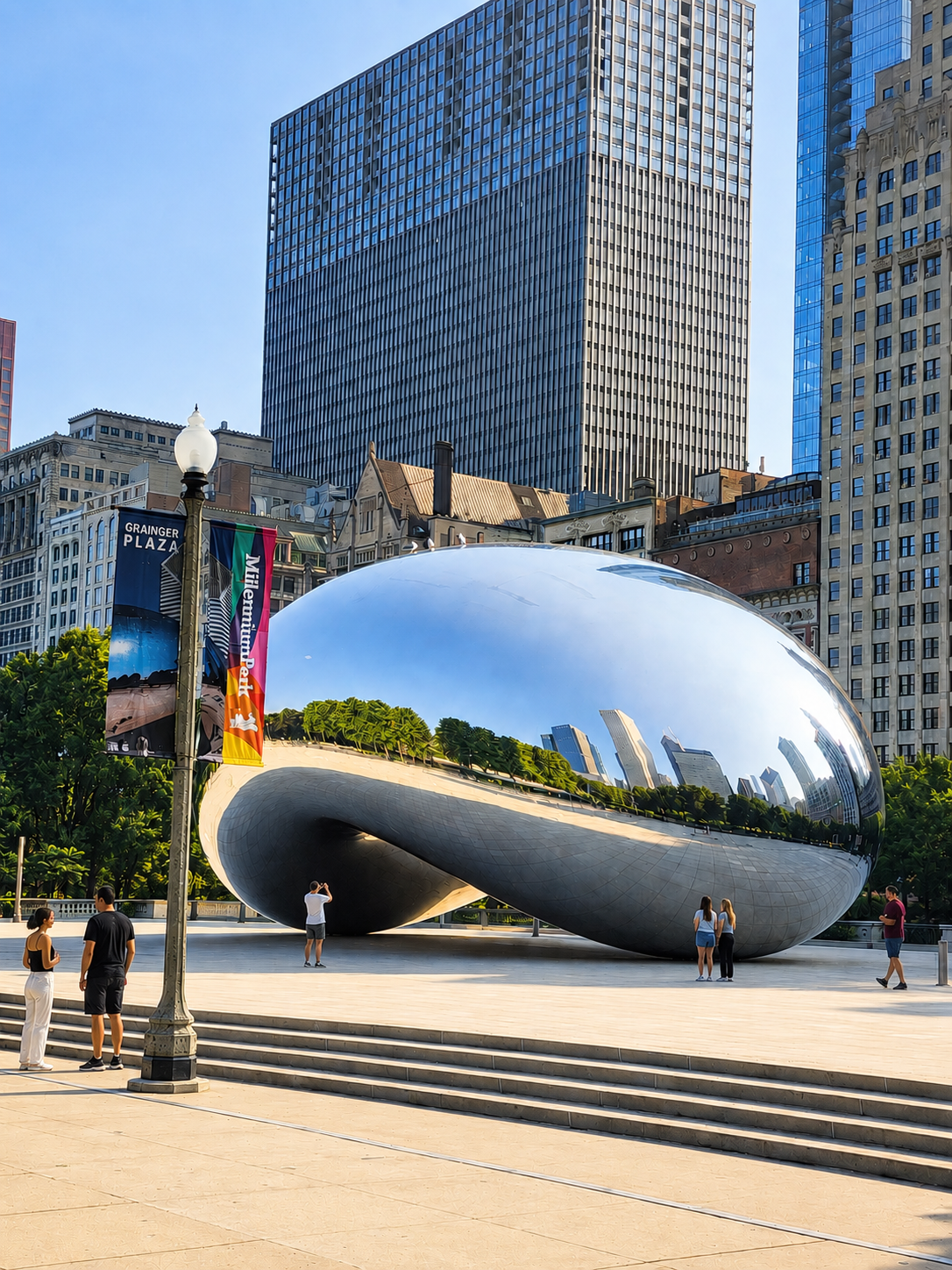
Another thing that struck me about Chicago was how often philanthropy has shaped the city itself. Millennium Park is perhaps the best-known example—a world-class public space made possible through an extraordinary partnership of civic leadership and private generosity. That same spirit continues today with the Obama Presidential Center, a project not only designed to preserve the story of a presidency but to create new public spaces, cultural programming, and economic opportunity for an entire neighborhood.
For a city celebrated for its architecture, museums, restaurants, and music, the city itself never felt overwhelming. The places most visitors come to experience are remarkably connected. Rather than spending your day figuring out how to get somewhere, you spend it discovering where you are. Before long, the city begins to feel surprisingly familiar.
When I think back on those four days, it isn't one attraction that comes to mind first.
It's a feeling.
Before this trip, I thought Chicago's story was its architecture. Then I wondered if it was the river. After walking through captured German submarine, I was convinced it might be the museums.
By the end of our stay, I realized I had been asking the wrong question.
So, why Chicago?
Some cities ask you to admire them.
Chicago asks you to participate.
If Chicago has earned a place on your travel list, I invite you to read our in-depth reviews of The Langham Chicago, Four Seasons Chicago, and The Peninsula Chicago. During our visit, we toured each property with their sales teams, evaluating not only the rooms and amenities but also the strengths, compromises, neighborhoods, and the type of traveler each hotel serves best. Our goal isn't simply to recommend a luxury hotel—it's to help you choose the one that will become the best starting point for your own Chicago story.
